

Managed offices sit at the intersection between adaptability, stability, and convenience. While not the right option for all businesses, they are ideal if you need a large, fairly flexible office space and have access to a healthy budget.
Keep reading to discover the pros and cons of managed office solutions, how managed offices compare with serviced offices, and tips on finding the best fit for your organisation.
What Is a Managed Office?
A managed office is a private, ready-to-use workspace that a third-party provider operates on your organisation’s behalf. Unlike in a traditional office lease, facilities management and service costs are combined into an inclusive rolling contract. It typically incorporates the following:
- Furniture: desks, chairs,and storage facilities.
- Utilities: heating, electricity, and high-speed internet.
- Maintenance: cleaning, repairs, and necessary renovations.
Renting a managed office gives your team a bespoke, professional space that you can customise without the time, cost, or administrative burden of managing an office independently. While your organisation will need to provide a brief for the fitout, the managing provider is responsible for carrying out renovations.
Pros of a Managed Office
If your organisation is looking for an office space with all the amenities and none of the stress, a managed office might be the solution. Here are some of the benefits you can enjoy:
Exclusive use
Unlike co-working spaces (which are shared with other individuals and businesses), managed offices provide greater privacy. In other words, your entire professional environment has exclusive access only for employees and clients. If you work in a sector that benefits from greater privacy (finance or healthcare, for instance), a managed office can meet that need.
Customisation
A 2025 Mitie survey of 3,000 UK employees estimated that poorly designed workplaces cost the UK economy up to £71.4 billion annually. On top of that, employees lost an average of 68 minutes each week to problems such as inadequate collaborative space and unreliable infrastructure. With the right managed office, you have freedom to customise the space, whether that means customising for accessibility requirements or, hey, maybe even adding nap pods.
Inclusive fee
In a conventional lease, you are responsible for managing the office yourself. This means paying separate providers for office costs, from cleaning and maintenance through to utilities. For a managed office, your organisation only needs to pay one up-front price to cover the cost of pretty much everything besides your technology.
Less administration
The UK spends around a third of the working day on administration, according to a report by Ricoh. That’s more than any other European country! A managed office means less complexity and, most importantly, less admin. With one provider handling the day-to-day details, your team can say goodbye to babysitting the office space.
Flexible terms
Managed offices offer shorter, more flexible terms than traditional office leases. This makes them a nice in-between option for growing businesses that need more customisation and privacy than a serviced office without the commitment of renting long-term.
Cons of a Managed Office
While managed offices provide many conveniences for organisations, there are a few cons that might make you take pause and consider going for a traditional lease or serviced office instead.
Higher costs
With great convenience comes great cost. It should be no surprise that the done-for-you customisation element can make managed offices more expensive than conventional leases. Shorter, more flexible lease times can also come at a premium.
Reduced control
Your workspace provider manages services such as cleaning, maintenance, and utilities, giving you less control over suppliers and response times. If you end up with an unresponsive office provider, you could also end up at the mercy of their schedule for potential emergency repairs.
Longer set-up time
Managed spaces are a more flexible solution than traditional office spaces but less so than serviced offices. For example, you may need to set up meeting booth fitouts or fit a kitchen, neither of which is typically included in managed office spaces. And, while a managed office might have a lease of one to three years, a serviced office is much shorter, in the range of one to twelve months.
Managed Offices Vs Serviced Offices
‘Managed office’ and ‘serviced office’ sound like similar terms, and there is some overlap, but they are not the same thing. The right option will depend on your business requirements. The primary distinction is that while managed offices encapsulate a fully private space, serviced offices are pay-by-desk zones with more in the way of shared spaces.
For an example, when an employee at a managed office goes for a break, she will pass only her own colleagues in the hallway and make her coffee in a fully equipped, private-to-the-office kitchen.
In a serviced office, an employee will pass other business workspaces in the building and likely cross paths with someone from another organisation in the shared kitchen.
One is ideal for privacy; the other is fabulous for everyday networking.
| Managed office space | Serviced office space | |
|---|---|---|
| Customisation | A customised space with greater control over the layout, branding, furniture, and technology | A fully equipped private office with limited customisation options |
| Contract length | More flexible than a traditional lease, but typically agreed for one to five years | Flexible terms, often including short agreements or monthly rolling contracts |
| Set-up time | Requires time for the workspace provider to complete the agreed fit-out | Usually ready for immediate occupation, with minimal upfront costs |
| Facilities and management | The provider handles facilities management, maintenance, utilities, and essential support services | The provider handles office management, with meeting rooms, breakout spaces, and other facilities often shared |
| Costs | A single monthly fee based on the dedicated space and included services | An all-inclusive monthly fee, often charged per desk or private office |
| Privacy | A private workspace for the organisation’s exclusive use | A private office within a flexible workspace shared with other businesses |
| Scalability | Suitable for growing businesses, established businesses, and larger teams seeking a stable base | Easier to scale up or down as business needs change |
Choose the Right Office Space With Quintessential
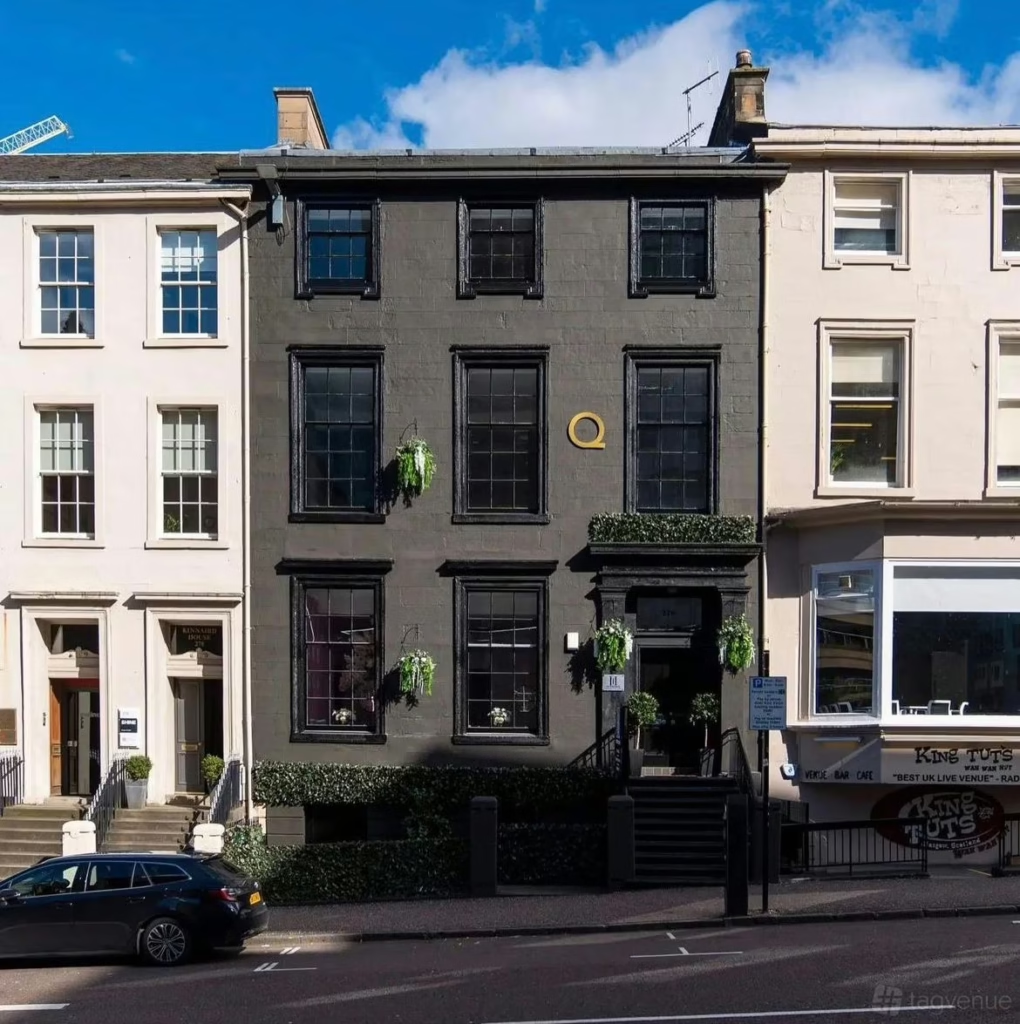
If a managed office sounds too large or expensive for your organisational needs, a serviced office comes a close second for convenience while maintaining flexibility and providing cost effectiveness. For instance, if your headcount is unpredictable, it may be better to pay by desk rather than letting space go to waste. Serviced offices are also a wonderful option for individuals or businesses that would like to prioritise networking
Quintessential’s offices are based in and around Glasgow and are set up for scaling businesses that need both flexibility and lower admin responsibilities.